Client Codex
The Shoulder, The Knee, The Comeback: One Client's First 12 Weeks
Bryce Fernandez
January 22, 2026 · 8 min read
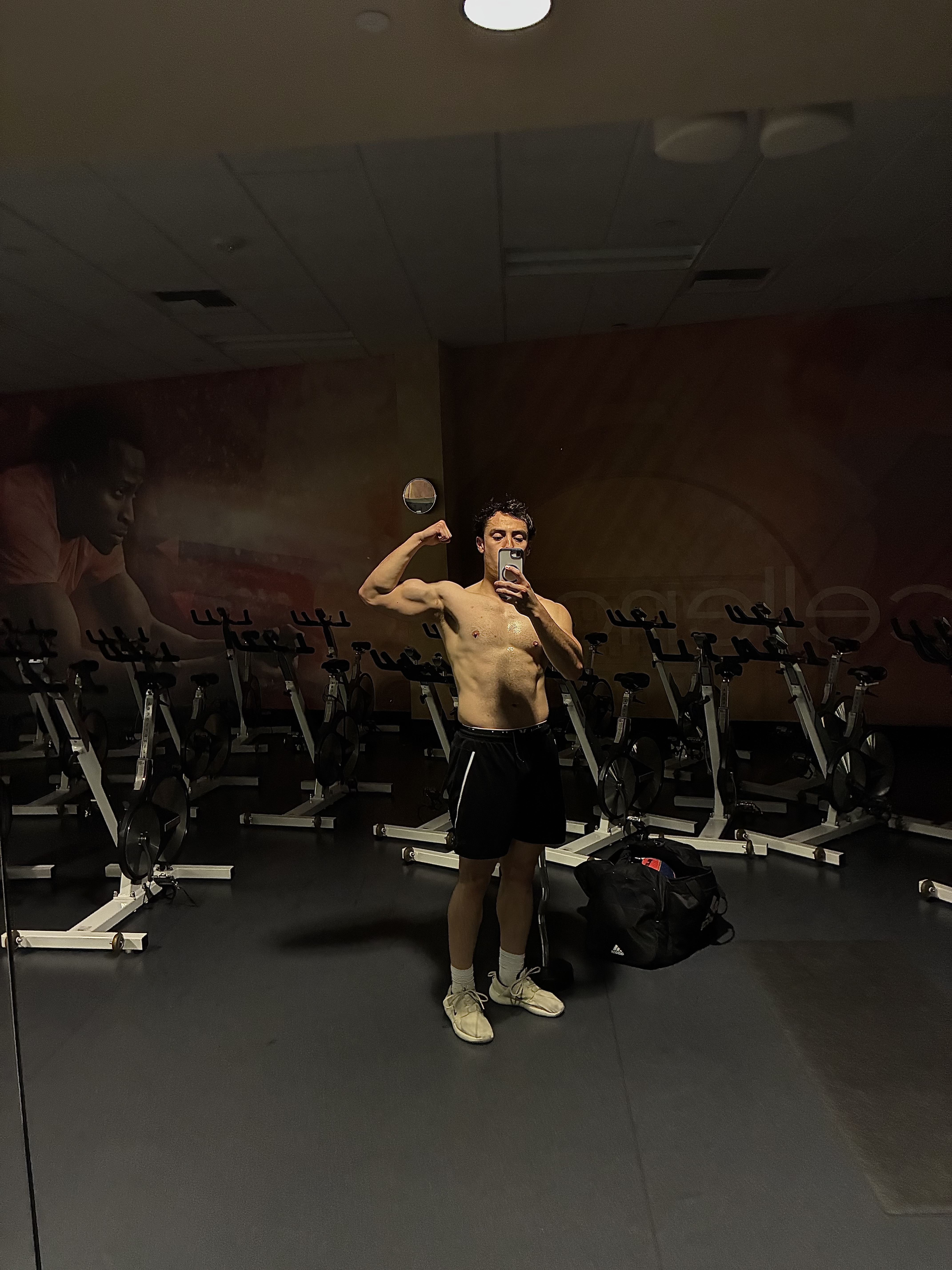
I am going to tell you a story about a client. I am not going to use their name. They know who they are if they read this. They have given me permission to share the arc.
This client came to me with two things: a shoulder that did not work and a knee that hurt to climb stairs. They were in their late thirties, working a high-stress operations role in the Bay Area, sitting 11 hours a day, and they had not lifted seriously in eight years. They were not obese. They were not deconditioned at the lung level. They were just stuck. The body had quietly decided to stop participating.
The first words out of their mouth in our intake were almost verbatim what I hear from half the people who walk in: "I just want to be able to play with my kids again."
Session one — the audit
I am not a physical therapist. I will say that loud. But I have an eye for movement patterns, and I have a network of PTs I refer to when something is past my scope.
In session one we did almost no lifting. We did a movement screen. The shoulder had lost most of its overhead range of motion. The knee was tracking inward on every squat below parallel. The client tried to apologize. I told them to stop. None of this was their fault. Eleven hours a day in a chair will do this to anyone. Now we know what we are working with.
We finished session one with three lifts at a very light weight to establish a baseline: goblet squat, dumbbell bench press, single-arm row. I told them to expect soreness for two days. I told them not to PR anything for the first three weeks no matter how good they felt. They half-listened. Everyone half-listens.
Session two — the inflection moment
The thing I will never forget about this client happened on session two. We were doing a kettlebell carry — just walking back and forth across the studio with a 35-pound bell in one hand, switching sides. Halfway through the second lap they stopped, stood up straight, and said:
"Wait. My shoulder didn't click."
That is the moment. That is the moment that turned this from "training" into "this is going to change my life." It was a single carry. It was not a heroic lift. It was a baseline of pain disappearing for ninety seconds, and the body noticed.
We finished session two and I sent them home with a one-page mobility routine — five movements, eight minutes, to be done before any work block longer than two hours. They followed it. Not perfectly. But often enough.
Session three — the first real work
By session three the warm-up was clicking. We could start to load. We did:
- Goblet squat: 5 sets of 5 at 35 lb (light, technique-focused).
- Dumbbell bench press: 4 sets of 6 at 25 lb each side.
- One-arm row: 3 sets of 8 at 40 lb.
- A finisher: 4 rounds of 30-second carry, 30-second rest.
End of session three they said the second sentence I will not forget: "I feel like I have access to my body again."
That is the entire job. That sentence right there. Everything after that is just program design.
Weeks 4 through 7 — the build
Once the audit was done and the movement was online, we ran a classic progressive overload program. Three sessions a week. Two heavy days, one technique day. Five primary lifts cycled across the week. Volume climbing every Monday by a small, predictable percentage.
By the end of week seven:
- Goblet squat became a back squat. They were squatting 145 lb for sets of five.
- Bench press hit a working set of 135 lb — a lifetime PR for them.
- The deadlift, which we did not even introduce until week four, was at 225 lb for clean singles.
- Resting heart rate dropped from 71 to 62.
- Sleep improved measurably — they were tracking it. Average sleep duration went from 6 hours 14 minutes to 7 hours 4 minutes.
We were not crash dieting. We were tightening protein. Targeting roughly 0.9 grams per pound of bodyweight. Hydration was up. They lost about nine pounds in this stretch and gained noticeable shoulder and arm definition. None of this was magic. All of it was a schedule held for seven weeks.
Weeks 8 through 10 — the specialization
This is the part where I bend the program to the person. Some clients need more volume. This client needed more intensity and more rest. We dropped to three sessions a week with longer recovery between heavy lower-body days. We added one focused hypertrophy block for the shoulders and arms — the aesthetic the client actually cared about even though they would not say it out loud at first.
I added a single-arm landmine press to bulletproof the shoulder. We programmed Bulgarian split squats to even out the knee tracking. We started doing weighted carries every single session because they were the movement that had made the biggest difference and the client loved them.
By week ten the shoulder had a full overhead range of motion. The knee climbed stairs without thinking. The body looked, by the client's own words, "like the photos from my twenties."
Weeks 11 and 12 — the handoff
The last two weeks were about teaching the client to run the program themselves. We sat down with the spreadsheet I had been keeping. I walked them through how I had decided each progression. I taught them how to read their own recovery and adjust the load. I showed them how to deload. I showed them how to take three weeks off for a vacation and come back without losing the gains.
The deliverable at the end of week 12 was not a body. It was a document and a working knowledge. A 14-page personal training manual, customized to their physiology, that they could carry with them for the next decade.
What this client did next
They re-enrolled. They are now in The Year. We meet twice a week. The deadlift is at 365 lb. The shoulder has been pain-free for fourteen months. They have started coaching their daughter's soccer team — something they told me in week three would never happen because their knees would not allow it.
What this case study is and is not
This is not a "before and after" with crash-diet photos. I will not run those. This is a record of what 12 weeks of structured, in-person, attentive coaching does to a body that has been ignored for almost a decade.
I have a dozen of these stories. They do not all look the same. Some clients add 30 pounds of muscle in 6 months. Some clients lose 40 pounds and gain back the knees they thought they had lost. Some clients just want to look better with their shirt off — and they get that too.
What every story has in common is the schedule. The body responds to schedule. That is the entire science. Everything else is decoration.
The ask
If you read this and recognized yourself — sore shoulder, sore knee, stuck for years, terrified the comeback is gone — I am telling you the comeback is not gone. The comeback is twelve weeks of showing up. That is it. That is the entire deal.
Read the hot take on why this all matters. Read the container framework so you pick the right starting point. Look at the services I offer.
Then come find me. I want to write the next case study with you.
— Bryce
Keep reading